
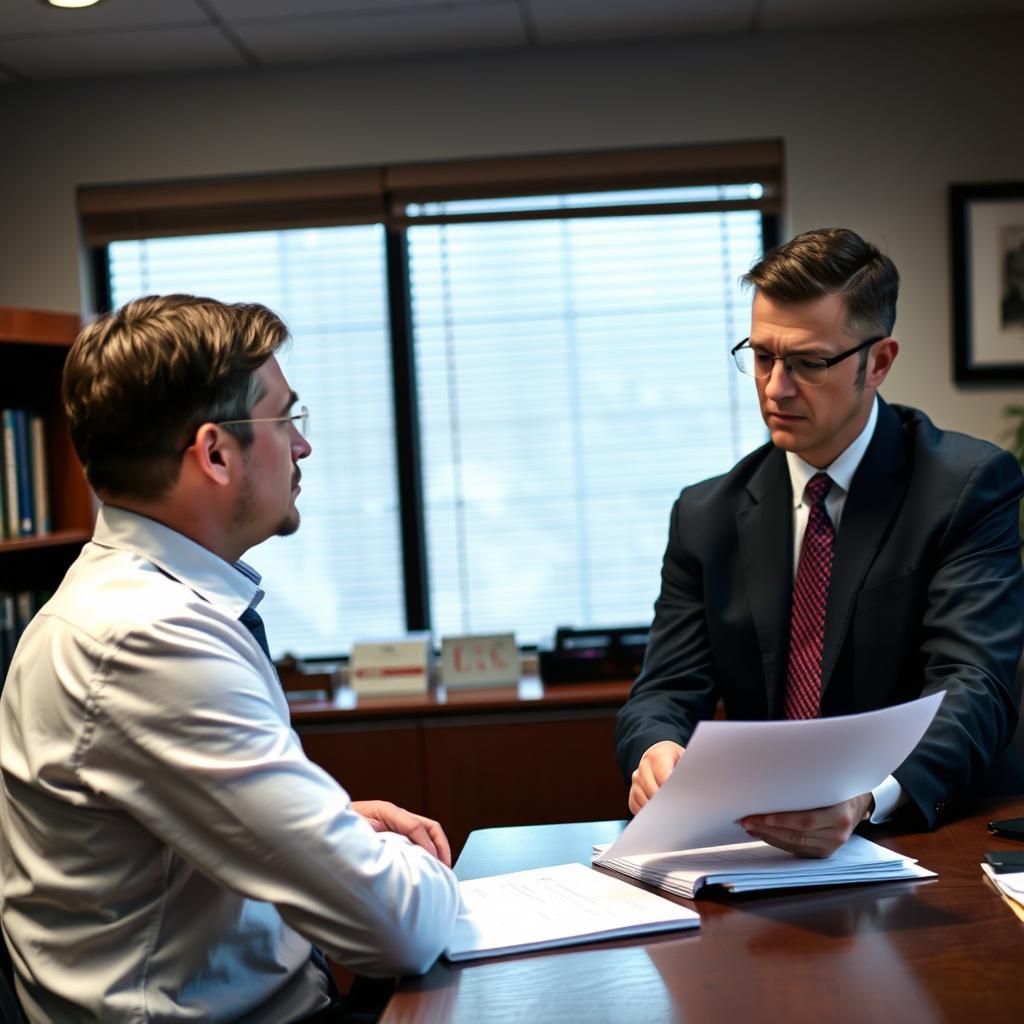
What happens at a DUI arraignment in Livingston County
You were driving on I-390 near Geneseo when flashing lights appeared in your rearview mirror — now you’re facing a DUI charge and a court date. The arraignment is your first formal appearance, and what happens in that courtroom sets the tone for everything that follows. At the arraignment, the judge will read the charges against you and ask how you plead. But before you answer, you need to understand what the prosecution must prove and what options are available under New York law. For many people, this is the most anxious moment of the entire case. Having an experienced attorney at your side can make a significant difference. To discuss your Livingston County DUI matter, reach Law Offices Of SRIS, P.C. at (888) 437-7747. Law Offices Of SRIS, P.C. – Advocacy Without Borders.
Strategy Options at the Arraignment
When the judge calls your case, you will be asked to enter a plea. You generally have three choices: plead guilty, plead not guilty, or, in some circumstances, ask the court for more time to review discovery. Each choice has different consequences, and once a plea is entered, changing it later can be difficult. A not‑guilty plea preserves your right to challenge the evidence, including the validity of the traffic stop, the administration of field sobriety tests, and the reliability of any chemical test. Your attorney can use the arraignment to raise issues such as bail or release conditions, and to begin building a defense tailored to the facts of your stop. Because the arraignment happens quickly after arrest, having counsel who is familiar with the Livingston County Supreme Court and its procedures means you can avoid missteps that could limit your options later.
What to Expect at the Livingston County Supreme Court
Your arraignment will take place at the Livingston County Supreme Court, located at 2 Court Street in Geneseo. The court sits in the 7th Judicial District, and its schedule generally runs weekdays from 9:00 a.m. To 5:00 p.m. When you arrive, you will check in with court staff and wait for your case to be called. The proceeding itself is usually brief — often less than ten minutes — but the judge may also address matters such as the suspension of your driver’s license (a “preadjudication suspension” under the New York prompt‑suspension law) and any terms of pretrial release. Mr. Sris and his Of Counsel appear regularly in Livingston County and understand how the judges handle DUI‑related arraignments. They can help you prepare for the questions the judge may ask and ensure that your rights are protected from the very first hearing.
Livingston County Supreme Court Court hours: Mon-Fri 9:00AM-5:00PM. Counsel appearing on traffic matters should plan filings accordingly.
Penalty Overview for a New York Driving While Intoxicated Charge
A first‑offense DWI in New York, charged under Vehicle and Traffic Law § 1192(2) or (3), is a misdemeanor. If convicted, you could face a fine, a jail sentence of up to one year, a driver’s license revocation, and the installation of an ignition interlock device. The court also imposes mandatory surcharges and may require participation in the New York State Drinking Driver Program (DDP). A second offense within ten years is a Class E felony with steeper penalties. Beyond the criminal consequences, a DWI conviction can affect your employment, professional licenses, and auto insurance rates. Because the potential penalties are serious, understanding the strengths and weaknesses of the prosecution’s case before the arraignment can help you decide whether to negotiate a reduction to a lesser charge, such as driving while ability impaired (DWAI) under § 1192(1). Mr. Sris and his Of Counsel work to achieve favorable outcomes based on the facts of each case. Results may vary.
Attorney Credentials — Experienced DUI Defense in Livingston County
Mr. Sris, Owner and Founder of Law Offices Of SRIS, P.C., is a former prosecutor who has practiced since 1997 and is admitted in New York, Virginia, Maryland, the District of Columbia, and New Jersey. He brings firsthand knowledge of how prosecutors build DUI cases — from the initial stop to the chemical‑test evidence — and uses that insight to challenge the Commonwealth’s proof. On every matter, he is supported by the firm’s Of Counsel attorneys, who together bring extensive combined legal experience. Mr. Sris and his Of Counsel have handled traffic matters across multiple jurisdictions, including appearances in Livingston County courts. While every case is different, the firm’s focus remains on identifying procedural errors, questioning the reliability of breath‑test equipment, and presenting mitigating factors to the court. For a discussion of your specific situation, reach the firm’s New York location at (888) 437-7747. Consultations are by appointment.
Frequently Asked Questions
Do I need a lawyer for a DUI arraignment in Livingston County?
You are not required to have a lawyer at your arraignment, but representing yourself puts you at a significant disadvantage. The prosecutor will be present and may make offers or raise issues that are difficult for a layperson to evaluate under pressure. An attorney can explain the charges, advise you on the plea to enter, challenge the legal sufficiency of the complaint, and request reasonable bail or release conditions. Without counsel, you risk waiving important rights unknowingly. Mr. Sris and his Of Counsel appear at arraignments in Livingston County and can ensure your interests are protected from the start.
What should I say at my DUI arraignment?
Generally, you should speak only when the judge asks you a direct question — typically your name, address, and your plea. Anything you say during the proceeding can be used against you later. Do not explain what happened, apologize, or discuss the facts of your case. Your attorney will handle all legal arguments and may address the court on your behalf. If you have not yet consulted with an attorney, you may ask the judge for time to do so before entering a plea. Keeping your statements to a minimum helps preserve your defense.
Can the judge suspend my license at the arraignment?
Yes, the judge may suspend your driver’s license at the arraignment if you refused a chemical test or if your blood alcohol content was above the legal limit. Under New York’s prompt‑suspension law, a refusal to submit to a chemical test results in an automatic one‑year revocation of your license. A test result of 0.08% or higher can lead to a suspension pending prosecution. Your attorney can challenge the legality of the stop or the test procedure, and in some cases may be able to obtain a hardship license or a conditional license so you can drive to work or school. These issues are often addressed shortly after the arraignment.
What is the difference between a DWI and a DWAI in New York?
DWI (driving while intoxicated) is a misdemeanor and generally applies when your BAC is 0.08% or higher, while DWAI (driving while ability impaired) is a traffic infraction for a BAC above 0.05% but below 0.08%. A DWAI carries lower fines, no criminal record, and a shorter license suspension. In many cases, an experienced attorney can negotiate a DWI charge down to a DWAI if the facts support it. An aggravated DWI (BAC 0.18% or above) is also a misdemeanor but with enhanced penalties. Understanding the difference helps you evaluate what a favorable resolution might look like in your case.
How long does a DUI case take in Livingston County?
The total time varies depending on the number of court appearances motions practice, and whether the case goes to trial, but many first‑offense DUI cases in Livingston County are resolved within a few months. After the arraignment, the court schedules a series of conference dates during which your attorney and the prosecutor discuss evidence, plea negotiations, and any pretrial motions. If those efforts do not lead to a resolution, the case proceeds to a hearing or trial. Because each case is different, the timeline depends on the facts, the court’s calendar, and the complexity of the legal issues involved.
Should I plead guilty at my arraignment?
Pleading guilty without first reviewing the prosecution’s evidence is rarely advisable. You have the right to enter a not‑guilty plea and to see the evidence against you, including police reports, breath‑test calibration records, and any video footage. Even if you believe you were over the legal limit, procedural errors — such as an improper traffic stop or mistakes in the administration of field sobriety tests — can lead to a reduction or dismissal of the charges. Your attorney will advise you on the most appropriate plea after evaluating the discovery materials.
What happens if I miss my arraignment in Livingston County?
Missing your arraignment typically results in the judge issuing a bench warrant for your arrest. Your driver’s license may also be suspended, and you could face additional criminal charges for failure to appear. If you realize you cannot attend your scheduled court date, contact your attorney immediately. In some circumstances, your lawyer may be able to appear on your behalf or request that the court reschedule your hearing. Ignoring the summons will only make your situation worse.
Will my DUI case go to trial in Livingston County?
The vast majority of DUI cases in New York are resolved through plea negotiations, not trials. However, if the evidence against you is weak because the stop was invalid or the test results are unreliable your attorney may recommend taking the case to trial. A trial gives you the opportunity to challenge the prosecution’s witnesses and present your own evidence to a judge or jury. Whether to accept a plea offer or go to trial is a decision you make after consulting with your counsel about the strengths and weaknesses of your case.
Can I get a DUI reduced or dismissed at the arraignment?
A DUI charge is very rarely dismissed at the arraignment itself, but the arraignment is where the groundwork for a future reduction or dismissal begins. If your attorney identifies a fatal defect in the complaint — such as the failure to allege an essential element of the offense — the court may dismiss the charge with leave to the prosecutor to refile. More commonly, the arraignment starts the process of obtaining and reviewing discovery, which can later lead to a motion to suppress evidence or a negotiated plea to a lesser charge. An early evaluation of your case is essential.
Where can I find a DUI defense attorney near Livingston County?
Mr. Sris and his Of Counsel represent clients in Livingston County courts from the firm’s New York location. You can request a consultation by calling (888) 437-7747. The firm’s attorneys have extensive experience handling DUI matters across upstate New York and understand the local court procedures and personnel in Geneseo and the surrounding Finger Lakes communities. Appointments are available by phone or in person at the firm’s New York location.
Speak With a Livingston County DUI Defense Attorney
Your arraignment is a critical step in the DUI process. Whether you decide to negotiate a plea or challenge the evidence, the outcome can affect your license, your record, and your future. Mr. Sris and his Of Counsel are available to discuss your case and help you determine an appropriate $1 forward. To schedule a consultation, call Law Offices Of SRIS, P.C. at (888) 437-7747. Our New York location serves clients throughout Livingston County and the Finger Lakes region. By appointment only.
For a full statutory breakdown of New York DWI laws, see our comprehensive analysis at srislawyer.com.
Attorney advertising. Prior results do not guarantee a similar outcome. Results may vary. Attorney responsible for this advertising: Mr. Sris.
Case results depend on a variety of factors unique to each case.