
Can a DUI be dismissed in Monroe County
You were driving home after a late dinner with friends on I-490 near Rochester. The taillights in front of you blurred for a second. A Monroe County Sheriff’s deputy pulled you over after you drifted slightly from your lane. The officer said they smelled alcohol. You agreed to field sobriety tests on the roadside, and minutes later you were in handcuffs, charged with driving while intoxicated under New York Vehicle and Traffic Law § 1192. Now you are facing a court date, a potential license suspension, and a stain on your record. The question burning in your mind is whether this DUI can ever go away. Yes—a DUI charge in Monroe County can be dismissed, but the path to dismissal depends on the facts of your stop, the evidence against you, and the legal strategies applied. Law Offices Of SRIS, P.C. – Advocacy Without Borders.
How a DUI can be dismissed in Monroe County
A DUI charge is not automatically a conviction. In Monroe County, the Monroe County Supreme Court and the local justice courts that handle misdemeanor DWI cases have the authority to dismiss charges when the prosecution cannot meet its burden. Dismissal can occur before trial—when the court suppresses evidence due to a constitutional violation, or when the District Attorney’s Office withdraws the charge after reviewing the evidence—or after trial, when a judge determines the people did not prove the elements beyond a reasonable doubt. The most common routes toward dismissal involve challenges to the initial traffic stop, the administration of field sobriety tests, or the breath or chemical test. If a judge finds the officer lacked reasonable suspicion to stop your vehicle or lacked probable cause to arrest, the breath test result and any observations made after the illegal seizure may be excluded. Without that evidence, the prosecution often cannot proceed.
Dismissal also becomes possible when the breath-test or chemical-test evidence itself is unreliable. In Monroe County, the New York State Police forensic laboratory handles alcohol and drug toxicology testing. If the calibration or maintenance records of the breath-test device are incomplete, the chain of custody is broken, or the officer did not follow the prescribed observation period, the results may be challenged. Additionally, if the officer failed to read the required chemical-test warnings or if the driver’s rights under the implied-consent law were violated, the refusal or test result may be excluded. Every DUI case is unique, and the right approach depends on the specific circumstances of the stop, testing, and arrest.
Frequently Asked Questions
Can a DUI charge be dismissed after a breath test in Monroe County?
A breath test result above 0.08% BAC does not automatically mean you will be convicted. If the traffic stop that led to the test was illegal, or if the breathalyzer device was improperly calibrated, the test result may be excluded from evidence. In Monroe County, cases involving the DataMaster DMT or other testing equipment are routinely examined for maintenance records, operator certifications, and adherence to the required 20-minute observation period before the test. When a court suppresses the breath test result because of a procedural defect, the prosecution may lack the evidence needed to prove intoxication beyond a reasonable doubt, and the charge can be dismissed or significantly reduced. A careful review of the evidence by experienced defense counsel is essential.
What are the most common reasons a DUI gets dismissed in New York?
Common reasons for dismissal in New York courts include: a traffic stop that lacked reasonable suspicion; an arrest that lacked probable cause; violations of the driver’s right to counsel before a chemical test; failure to administer field sobriety tests according to National Highway Traffic Safety Administration standards; errors in the breath-test process; and testing equipment that was not properly calibrated. In Monroe County, local judges are trained to apply these legal standards strictly, and motions to suppress evidence are heard at pretrial hearings. When evidence is suppressed, the District Attorney’s Office often cannot proceed, and the case is dismissed. Every case rests on its own facts, and there is no single formula that guarantees a dismissal.
Can a DUI be reduced to a lesser charge in Monroe County?
Yes. When a complete dismissal is not attainable, a reduction to a non-criminal traffic infraction or a lower-level Driving While Ability Impaired (DWAI) charge may be negotiated. A DWAI under Vehicle and Traffic Law § 1192(1) is not a crime in New York, and it carries a shorter license suspension and lower fines than a DWI. In Monroe County, reductions sometimes occur when the evidence is weak or when the defendant completes an approved alcohol-education program before the court date. An experienced defense lawyer can present mitigating factors and negotiate with the prosecution to pursue a resolution that keeps your record clean.
Do I need a lawyer to fight a DUI in Monroe County?
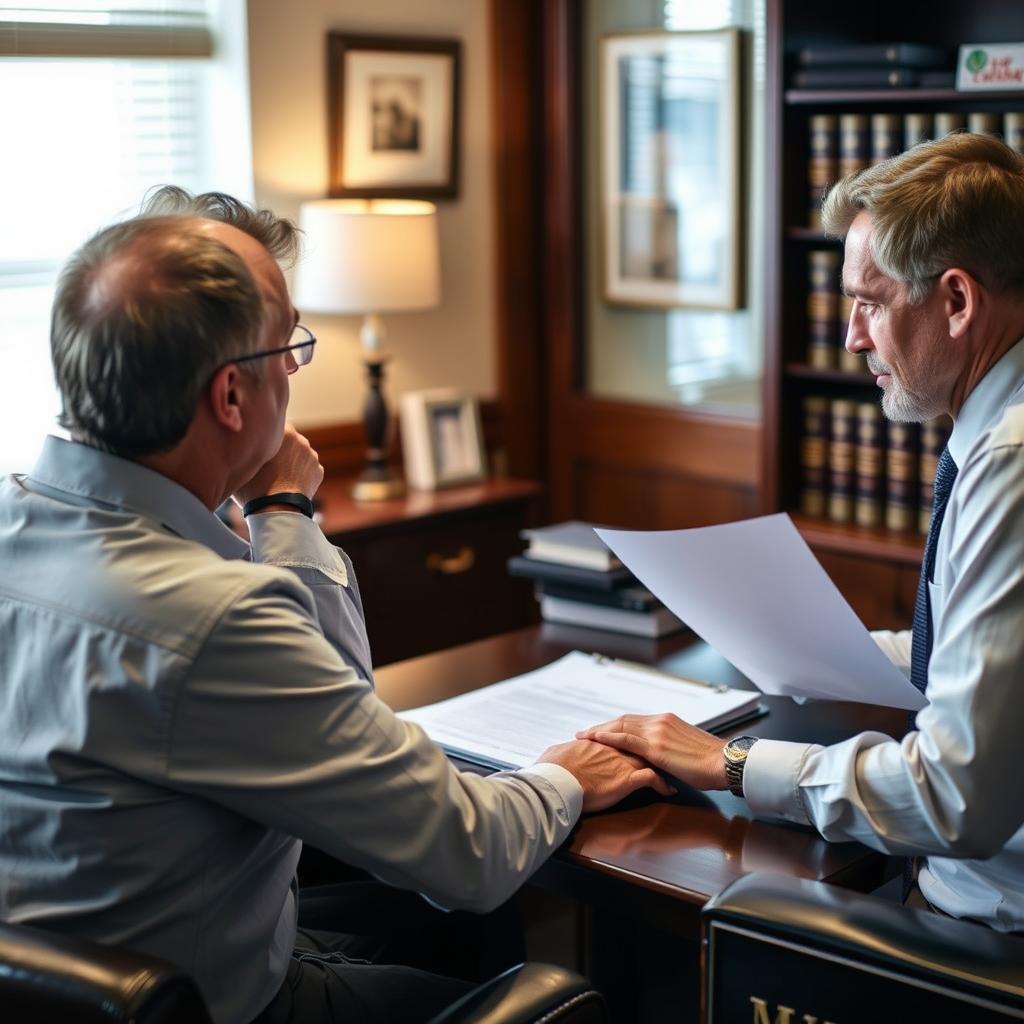
You are not legally required to hire a lawyer, but navigating a DUI case without one is extremely risky. DWI charges in New York are misdemeanors that can lead to a permanent criminal record, jail, fines, and a mandatory license revocation. The legal process involves motion practice, rules of evidence, and negotiation with the Monroe County District Attorney’s Office. Mr. Sris and the firm’s Of Counsel attorneys represent clients in Monroe County courts, analyzing the evidence, challenging illegal stops, and advocating for favorable outcomes. For a consultation, reach Mr. Sris and his Of Counsel at (888) 437‑7747.
What is the difference between a DWI and a DWAI in New York?
In New York, a DWI (driving while intoxicated) applies when a driver’s blood alcohol content is 0.08% or higher, or when a driver is impaired to the extent that they cannot safely operate a vehicle. A DWI is a misdemeanor. A DWAI (driving while ability impaired) applies when the driver’s ability is impaired to any extent by alcohol, even if the BAC is below 0.08%. A first-offense DWAI is a traffic infraction, not a crime. Because the distinction between DWI and DWAI has enormous consequences for your criminal record and driving privileges, an attorney may argue for a reduction to DWAI when the evidence of intoxication is marginal.
How long does a DUI case take in Monroe County?
The timeline for a DWI case in Monroe County depends on court scheduling, motion practice, and whether the case goes to trial. After an arrest, the driver receives a uniform traffic ticket with a return date for the local criminal court. At that initial appearance, the court may adjourn the case for several weeks for defense counsel to review the evidence. If motions are filed, pretrial hearings can add weeks or months. Cases that resolve by plea may conclude within a few months; cases that go to trial can take longer. Every case follows its own path, and the timeline should not be your primary concern—building a strong defense is.
What happens if I refused a breath test in Monroe County?
Refusing a chemical test in New York triggers a separate administrative proceeding at the Department of Motor Vehicles. Your driver’s license will be suspended at the arraignment for the refusal, and you face a mandatory one-year revocation if the administrative law judge finds the refusal was knowing and voluntary. However, a refusal does not automatically mean a DWI conviction—the prosecution must still prove intoxication using other evidence, such as the police officer’s observations of driving pattern, field sobriety tests, and physical signs. If that evidence is insufficient, the DWI charge may still be dismissed or reduced, even after a refusal.
Can an out-of-state driver get a DUI dismissed in Monroe County?
Yes. Out-of-state drivers facing a DWI in Monroe County are entitled to the same constitutional protections as New York residents. The legality of the stop, arrest, and testing procedures applies regardless of where the driver is from. Many Monroe County stops occur on I‑90, I‑390, and other highways traveled by visitors. The firm has experience representing out-of-state clients and can often appear on your behalf for many court dates, reducing the need for you to travel back to Monroe County. The goal remains the same: challenge the evidence and seek dismissal or reduction.
Is a DUI a criminal offense in Monroe County?
Yes. In New York, driving while intoxicated under Vehicle and Traffic Law § 1192(2), (3), or (4) is an unclassified misdemeanor for a first offense. A misdemeanor conviction creates a criminal record, can result in a jail sentence of up to one year, and carries fines and mandatory surcharges. A second or subsequent DWI within ten years is a felony. Because a DWI conviction has serious consequences beyond the courtroom, including employment background checks and professional licenses, the focus from the first court appearance should be on challenging the charge.
About Mr. Sris and His Of Counsel Team
Mr. Sris, Owner and Founder of Law Offices Of SRIS, P.C., has practiced since 1997 and is admitted in Virginia, Maryland, the District of Columbia, New Jersey, and New York. As a former prosecutor, he understands how the government builds DUI cases—and where the weaknesses are. Mr. Sris and his Of Counsel attorneys bring extensive combined legal experience to DUI defense. Results may vary. For a consultation, reach Mr. Sris and his Of Counsel at (888) 437‑7747.
Rochester Traffic Lawyer •
Buffalo DUI Lawyer •
Syracuse DUI Attorney
New York Vehicle and Traffic Law § 1192 •
Monroe County (7th Judicial District) Courts
Attorney advertising. Prior results do not guarantee a similar outcome. Case results depend on a variety of factors unique to each case. Results may vary.