
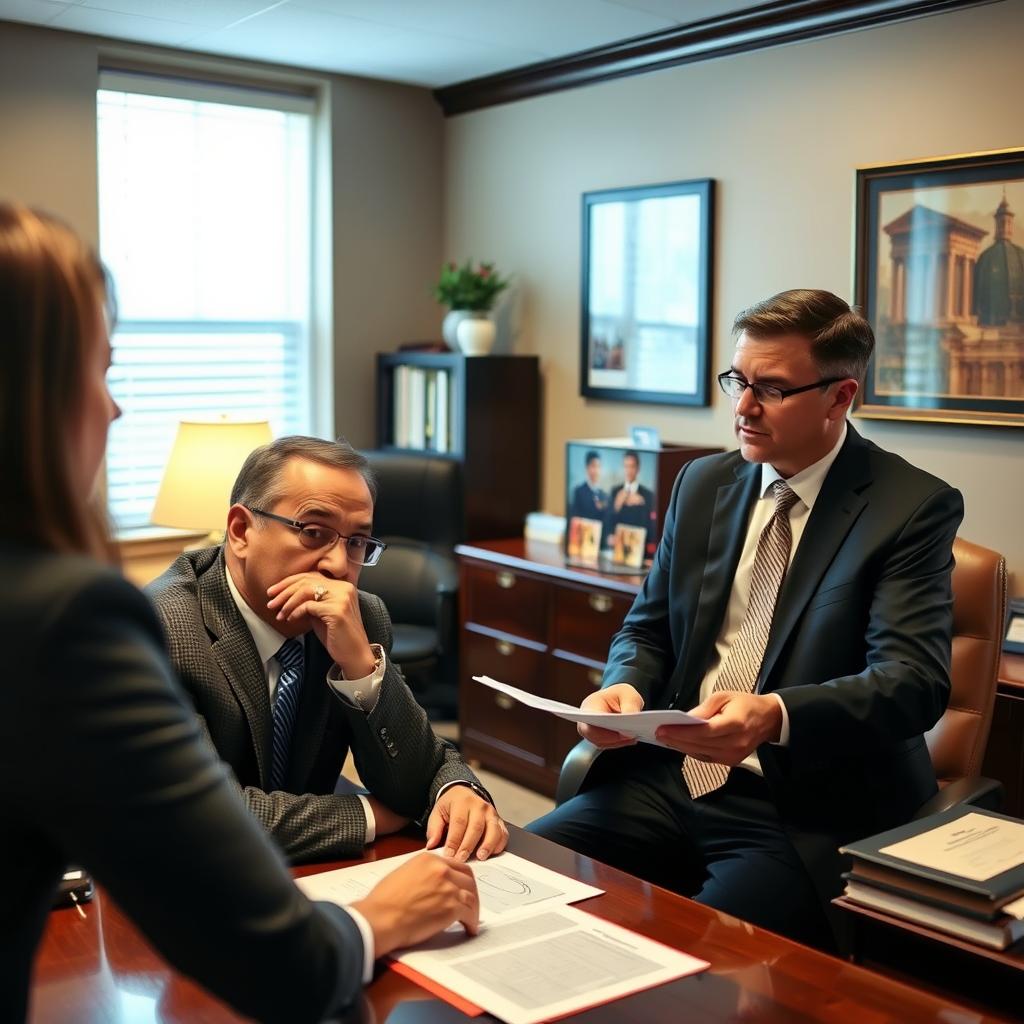
DWI Lawyer Schoharie County, NY
Facing a DWI charge in Schoharie County, New York, can be a deeply unsettling experience. The legal framework under New York Vehicle and Traffic Law § 1192 defines driving while intoxicated, driving while ability impaired, and aggravated DWI based on blood alcohol concentration and other factors. A conviction in a local justice court can lead to significant driver’s license sanctions, fines, mandatory surcharges, and even jail time for repeat offenses. Schoharie County, part of the Mohawk Valley and the 3rd Judicial District, has a network of town and village courts where DWI cases are heard. Unlike New York City, where the Traffic Violations Bureau handles cases with no plea bargaining, local courts in Schoharie County allow for negotiation and case-specific advocacy. Law Offices Of SRIS, P.C., with a New York location serving clients across the state, recognizes how a DWI can affect your livelihood, insurance rates, and personal freedoms. To speak with an attorney about your situation, call (888) 437-7747. Law Offices Of SRIS, P.C. – Advocacy Without Borders.
DWI Defense in Schoharie County, NY
When law enforcement stops a driver in communities such as Schoharie, Cobleskill, Middleburgh, Sharon Springs, Richmondville, or Esperance, they follow procedures under New York’s implied consent law. A DWI arrest typically leads to a chemical test, and a refusal can trigger separate administrative proceedings with the DMV. Schoharie County DWI cases are adjudicated in the local justice courts—not in the county’s Supreme Court, which handles civil and felony matters. The local courts provide the venue for arraignment, pre-trial motions, and, if necessary, trial.
Because these courts operate in a rural and small-town environment, the judges and prosecutors often have experience with DWI cases and are familiar with the local law enforcement agencies that patrol the major roadways such as I-88 and State Routes 7, 10, and 30. Procedurally, a defendant enters a plea and may seek to challenge the stop, the adequacy of the field sobriety tests, or the reliability of the breath or blood test results. The prosecution must prove the elements of the offense beyond a reasonable doubt. A lawyer who understands the nuances of New York’s DWI laws can evaluate the discovery, explore potential suppression issues, and negotiate for a charge reduction when appropriate. While every case is different, the presence of an attorney often leads to a more informed and deliberate resolution.
How Mr. Sris and His Of Counsel Handle DWI Cases
The approach taken by Mr. Sris and his Of Counsel in DWI matters emphasizes thorough preparation and strategic motion practice. Review of the arrest report, calibration records for the breath-test device, and officer training documentation is routine. For a first-offense DWI, a lawyer may pursue a reduction to a DWAI (driving while ability impaired), which carries fewer points and a shorter license suspension period. When the evidence supports it, a motion to suppress or to dismiss can be filed. For repeat offenses, the stakes are significantly higher, and a comprehensive defense becomes even more critical. The firm’s multi-state experience gives it perspective on how similar infractions are handled elsewhere, while the attorneys remain focused on New York’s statutes and local court practices.
The process typically involves an initial case evaluation, an explanation of the charges and potential consequences, and a realistic discussion of the available defense avenues. Mr. Sris and his Of Counsel work to keep clients informed at each stage, from the first court appearance to the final disposition. Because DWI charges can also trigger a DMV hearing to contest a license suspension, the defense may involve parallel proceedings. Each case is treated individually, recognizing that a DWI arrest touches nearly every aspect of a person’s life.
About Mr. Sris and His Of Counsel Team
Mr. Sris, Owner and Founder of Law Offices Of SRIS, P.C., is a former prosecutor. He founded the firm in 1997 and is admitted to practice in Virginia, Maryland, the District of Columbia, New Jersey, and New York. His background in criminal prosecution provides insight into how the government builds its case, which is valuable in DWI defense. Mr. Sris testified before the Virginia House Courts of Justice Committee in support of 2019 HB 635 (chief patron Del. David Bulova).
Working alongside Mr. Sris, his Of Counsel team brings experience across multiple practice areas. The firm’s New York location serves clients who need representation in local justice courts throughout the state, including Schoharie County. The collective approach allows the attorneys to draw on a broad range of knowledge while giving each case the attention it demands.
Frequently Asked Questions
What is the legal definition of DWI in New York?
Driving while intoxicated (DWI) under New York VTL § 1192 means operating a motor vehicle with a blood alcohol concentration (BAC) of 0.08% or higher, or while actually intoxicated regardless of the specific BAC. The law also prohibits driving while ability impaired by alcohol (DWAI) at a BAC of more than 0.05% but less than 0.08%, as well as driving impaired by drugs. Aggravated DWI occurs when the BAC is 0.18% or higher. The specific charge dictates the potential penalties and the collateral consequences for a driver’s license.
What are the potential penalties for a first DWI in Schoharie County?
A first-offense DWI is a misdemeanor that can result in a fine, a mandatory surcharge, a driver’s license suspension or revocation, and possibly up to one year in jail. The court may also require participation in the New York Drinking Driver Program (DDP) and installation of an ignition interlock device. A DWAI carries a lesser suspension and no criminal record, but it still adds points to a driving record. The specific penalties depend on the facts of the case and the judge’s discretion.
Can I refuse to take a breath test in New York?
Yes, a driver may refuse a chemical test, but the refusal triggers an administrative license revocation from the DMV that is separate from any criminal charge. Under New York’s implied consent law, a refusal results in a one-year license revocation for a first refusal, and longer for subsequent refusals. The refusal can also be used as evidence in a criminal DWI trial alongside other evidence of intoxication. It is important to weigh the consequences carefully before making a decision.
How does a lawyer help with a DWI charge in the local courts?
An attorney scrutinizes the traffic stop, field sobriety testing, and chemical test procedures to identify constitutional or procedural violations that may lead to dismissal or reduction of the charges. A lawyer can also negotiate with the prosecutor for a plea to a lesser offense when the evidence is strong, advocate for alternative sentencing, and represent the driver at the DMV refusal hearing. Because local court rules and the prosecutor’s policies vary, having counsel who is familiar with the courts in Schoharie County is an advantage.
Do I need a lawyer for a DWI in Schoharie County?
You are not legally required to have an attorney, but the consequences of a DWI conviction—including a criminal record, license suspension, increased insurance costs, and potential jail—make legal representation highly advisable. An attorney can explain the procedural steps, evaluate the evidence against you, and protect your rights at all stages. Especially in a local justice court where the proceedings may move quickly, having an advocate helps ensure you do not unknowingly waive valuable defenses.
For guidance on your specific situation, reach Law Offices Of SRIS, P.C. at (888) 437-7747.
Related DWI Defense Resources: New York DWI Lawyers | Albany County DWI Lawyer | Columbia County DWI Lawyer
Official Information: New York State DMV — DWI | Schoharie County Courts (3rd Judicial District) | N.Y. Vehicle & Traffic Law § 1192
Attorney advertising. Prior results do not guarantee a similar outcome. Case results depend on a variety of factors unique to each case. Results may vary.