
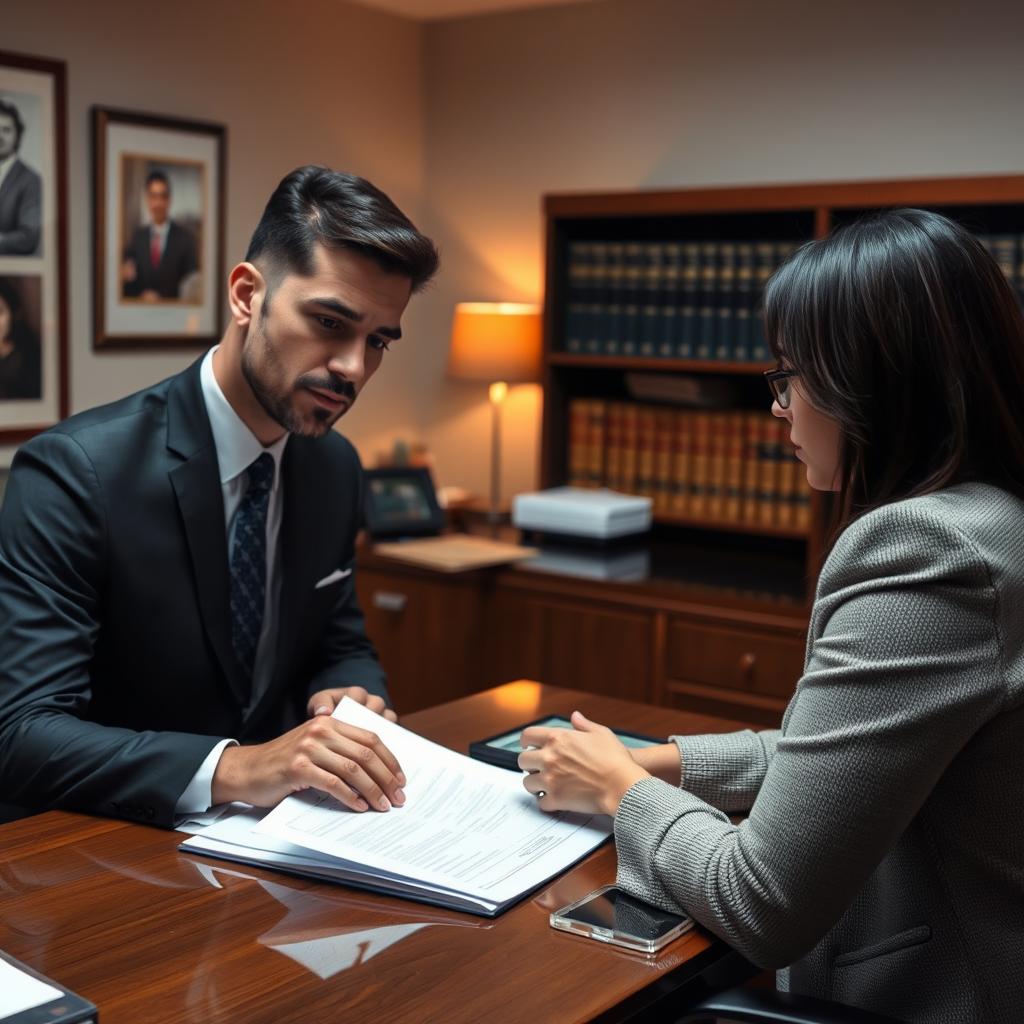
What happens at a DUI arraignment in Cleveland Park
A DUI arraignment is your first appearance in court after an arrest for driving under the influence. In Cleveland Park, DUI cases are heard at the D.C. Superior Court, 500 Indiana Avenue NW, in Washington, D.C. At the arraignment, the judge will formally advise you of the charges, confirm whether you have an attorney, and ask you to enter a plea. The court will also decide on release conditions, which may include personal recognizance, a monetary bond, or conditions such as alcohol testing. This hearing is procedural—it is not the trial—but it sets the stage for your defense by establishing deadlines, discovery obligations, and the next court date. Mr. Sris and his Of Counsel appear at D.C. Superior Court for DUI matters on behalf of clients in Cleveland Park and the surrounding neighborhoods. If you have an upcoming arraignment, contact Law Offices Of SRIS, P.C. at (888) 437-7747 to request a consultation before your court date. Law Offices Of SRIS, P.C. – Advocacy Without Borders.
What a DUI arraignment in Cleveland Park involves
Cleveland Park residents who are charged with DUI appear at the D.C. Superior Court, which is served by the firm’s Arlington location. Although no firm location is physically located in the District, Mr. Sris and his Of Counsel routinely appear in D.C. Courts and represent clients from neighborhoods including Cleveland Park, Woodley Park, and Tenleytown. The court is accessible by the Judiciary Square Metro station on the Red Line, and parking is available nearby.
At the arraignment, you will stand before a judge. The judge will read the charges against you, including the specific DUI statute alleged—commonly D.C. Code § 50‑2206.11—and will inform you of your right to counsel. You have the right to hire an attorney of your choice; if you cannot afford one, the court may appoint a public defender. After you have been advised of the charges, you will be asked to enter a plea. The three typical pleas are not guilty, guilty, or nolo contendere. Most DUI defendants enter a not‑guilty plea at arraignment, preserving all defenses while their attorney evaluates the evidence, the legality of the traffic stop, and any chemical‑test results. The judge will then set conditions of release and schedule a status hearing or trial date. It is important to have an attorney present at arraignment because the decisions made that day can affect bail, driving privileges, and the overall direction of your case.
Frequently asked questions about DUI arraignment in Cleveland Park
What happens if I plead not guilty at my DUI arraignment?
If you plead not guilty, the case moves forward to a status hearing or trial at the D.C. Superior Court. The judge will schedule future court dates, and your attorney will begin reviewing the police report, any video evidence, breath or blood test results, and the legality of the traffic stop. Between the arraignment and the next court date, your attorney may file motions to suppress evidence or to challenge the admissibility of certain tests. Pleading not guilty at arraignment is standard and does not indicate that you will go to trial; it gives your defense time to investigate and negotiate with the prosecutor.
Do I need a lawyer for the arraignment in Cleveland Park?
You are not legally required to have a lawyer at arraignment, but appearing without one can put your defense at a disadvantage. The judge may proceed with the hearing without counsel, and you will be expected to enter a plea without the benefit of legal advice. An attorney can assess whether your release conditions are appropriate, argue for a personal‑recognizance bond, and begin building a defense strategy from the first court appearance. Because the arraignment sets the tone for your case, many people choose to retain counsel before the hearing.
How long does a DUI case in D.C. Take from arraignment to resolution?
The timeline for a DUI case in D.C. Varies by the complexity of the case, the court’s calendar, and whether the case resolves by plea or goes to trial. After arraignment, the court typically sets a status hearing within a few weeks. If discovery is not yet complete, additional status dates may be scheduled. Cases that result in a negotiated disposition before trial can resolve within a few months. If a trial is necessary, the case may take longer depending on the availability of witnesses and the court’s trial schedule. Your attorney can provide a more specific estimate based on the facts of your case.
Can I change my plea after arraignment?
Yes, you can change your plea later in the proceedings, usually with the court’s approval. If new information comes to light or evidence weakens the prosecution’s case, your attorney may negotiate a plea to a reduced charge, and you can then enter a new plea at a later hearing. Alternatively, if you initially pleaded not guilty and later decide to plead guilty, you can do so after discussions with your attorney and the prosecutor. Any change of plea must be addressed in open court, and the judge will ensure that your decision is knowing and voluntary.
What are the possible penalties for a DUI in the District of Columbia?
DUI penalties in D.C. Vary based on the offense level, your blood alcohol concentration (BAC), and whether you have prior offenses. A first DUI is generally a misdemeanor, punishable by up to 90 days in jail, a fine of up to $1,000, and a driver’s license suspension. Higher BAC levels or repeat offenses can lead to mandatory minimum jail time, longer license suspensions, and ignition interlock requirements. The court may also order alcohol education or treatment programs. Because the consequences can be significant, it is important to speak with an attorney about your specific situation.
Will my driver’s license be suspended at the arraignment?
Your driver’s license is not automatically suspended at arraignment, but the District may pursue a separate administrative suspension. After a DUI arrest, the D.C. Department of Motor Vehicles may initiate an administrative license suspension based on a breath‑test result or a refusal to submit to testing. This is a civil process distinct from the criminal court case. The arraignment itself does not suspend your license, but the judge may impose conditions related to driving, such as prohibiting alcohol consumption or requiring ignition interlock. Your attorney can advise you on both the criminal and administrative aspects of your case.
What should I bring to my DUI arraignment at D.C. Superior Court?
You should bring your citation or notice of hearing, a valid photo identification, and any documents related to your release conditions. If you have already retained an attorney, coordinate with your lawyer about what you need to present. Dress appropriately—business or business‑casual attire is recommended—and arrive early to locate the courtroom and meet your attorney if you have one. Cell phones are generally permitted, but you should check the court’s current security and electronics policy. Anyone accompanying you will not be permitted to speak on your behalf unless they are your attorney.
Is a DUI in D.C. A criminal offense?
Yes, a DUI in the District of Columbia is a criminal misdemeanor offense, not a civil traffic infraction. Under D.C. Law, driving under the influence of alcohol or drugs is prosecuted in the Criminal Division of D.C. Superior Court. A conviction can result in a permanent criminal record, jail time, fines, and a license suspension. Because it is a criminal matter, you have the right to a trial, the right to an attorney, and the right to confront witnesses. The Commonwealth (or the District) must prove the charge beyond a reasonable doubt.
Can the arraignment be rescheduled if I cannot appear?
The court may permit a continuance in limited circumstances, but failing to appear without prior approval can result in a bench warrant for your arrest. If you have a legitimate reason—such as a medical emergency or a conflict that your attorney can verify—your lawyer can request a rescheduled date from the judge. Do not assume the hearing will be automatically postponed. Always communicate with your attorney well in advance so that a proper motion for a continuance can be filed.
What happens after the arraignment if I hire Law Offices Of SRIS, P.C.?
After the arraignment, your attorney will immediately begin working on your defense. This includes requesting discovery, reviewing the police report and any chemical‑test evidence, evaluating the legality of the traffic stop, and discussing possible defense strategies with you. Mr. Sris and his Of Counsel team will represent you at all subsequent court dates, including status conferences and any motions hearings. If a plea negotiation is appropriate, they will handle those discussions, and if a trial becomes necessary, they will prepare your case thoroughly. For guidance on your specific matter, reach Law Offices Of SRIS, P.C. at (888) 437‑7747.
About Mr. Sris and his Of Counsel team
Mr. Sris, Owner and Founder of Law Offices Of SRIS, P.C., has been practicing law since 1997. A former prosecutor, he brings a firsthand understanding of how the government builds its case to every DUI matter. Mr. Sris is admitted to practice in Virginia, Maryland, the District of Columbia, New Jersey, and New York, and he has appeared in D.C. Superior Court for clients in Cleveland Park and across the District. His Of Counsel team works collaboratively on all matters, ensuring that clients benefit from extensive combined legal experience. Mr. Sris testified before the Virginia House Courts of Justice Committee in support of 2019 HB 635 (chief patron Del. David Bulova). The firm’s Arlington location serves Cleveland Park clients, and consultations are available by appointment. Call (888) 437‑7747 to request a consultation.
Related resources for DUI cases in D.C.:
- DUI lawyer in Georgetown
- DUI lawyer in Spring Valley
- DUI lawyer in Chevy Chase
- DUI lawyer in American University Park
- Washington, D.C. Traffic lawyer
Official D.C. Legal resources:
- D.C. Superior Court
- D.C. Code Title 50 (Motor Vehicles and Traffic)
- Council of the District of Columbia
Attorney advertising. Prior results do not guarantee a similar outcome.
Results may vary.
Case results depend on a variety of factors unique to each case.